Hernia Treatment in Solapur: Bulge, Pain or Lump? When Do You Need Surgery?
Table of Contents
A bulge, lump, or swelling in the abdomen or groin may seem harmless, especially if it disappears when you lie down. However, it could be a sign of a hernia, a common condition that should not be ignored.
If you are searching for hernia treatment in Solapur, early evaluation is important. A hernia may remain painless for some time, but it can gradually enlarge or lead to complications that require urgent medical care.
The good news is that hernias are treatable. Depending on the type, size, symptoms, and overall health, your surgeon may recommend observation or surgical repair through open or minimally invasive techniques.
For patients looking for an experienced hernia doctor in Solapur, the General Surgery team at Yashodhara Super Speciality Hospital provides evaluation, diagnosis, and personalized treatment plans.
In this guide, you’ll learn about hernia symptoms, causes, types, diagnosis, treatment options, recovery, and when surgery may be necessary.
What Is a Hernia?
A hernia occurs when an internal organ or fatty tissue pushes through a weak area in the surrounding muscle or connective tissue.
The abdominal wall normally keeps the organs securely in place. When this wall becomes weak, tissue can protrude outward, creating a noticeable bulge or swelling.
Common signs include:
- A visible lump or bulge
- Swelling in the abdomen or groin
- Pressure or heaviness
- Pain or discomfort
- A soft mass that may disappear while lying down
The swelling often becomes more noticeable while standing, coughing, sneezing, lifting heavy objects, or straining during bowel movements.
Although some hernias cause little discomfort, any persistent lump should be evaluated by a qualified surgeon.
Common Symptoms of a Hernia
Hernia symptoms vary depending on its location and severity.
Visible Bulge
The most common symptom is a bulge in the abdomen or groin that becomes more noticeable while standing or coughing.
Pain or Discomfort
Many patients experience:
- Aching pain
- Burning sensation
- Pulling discomfort
- Pressure around the swelling
Symptoms often worsen after prolonged standing, heavy lifting, or physical activity.
Heaviness in the Abdomen or Groin
Some people describe a constant feeling of heaviness, especially by the end of the day.
Swelling That Increases Over Time
A hernia may gradually become larger if left untreated.
Difficulty Performing Daily Activities
Walking, exercising, bending, lifting, or household work may become uncomfortable as the hernia enlarges.
Emergency Symptoms
Seek immediate medical care if you develop:
- Sudden severe pain
- A hard or painful lump
- A bulge that cannot be pushed back
- Persistent vomiting
- Fever
- Abdominal swelling
- Inability to pass stool or gas
Patients with these symptoms should immediately visit Yashodhara Super Speciality Hospital’s Emergency & Trauma Care department:
What Causes a Hernia?
A hernia usually develops due to a combination of muscle weakness and increased pressure inside the abdomen.
Common contributing factors include:
- Heavy lifting
- Chronic coughing
- Chronic constipation
- Obesity
- Pregnancy
- Previous abdominal surgery
- Difficulty passing urine
- Repeated physical strain
An incisional hernia can develop through a previous surgical scar months or even years after surgery.
Who Is at Higher Risk?
Certain people are more likely to develop a hernia.
Older Adults
Muscles naturally weaken with age, increasing the risk.
Obesity
Excess body weight places additional pressure on the abdominal wall.
Patients concerned about obesity or lifestyle-related conditions can explore Yashodhara Super Speciality Hospital’s General Medicine & Lifestyle Diseases services:
Chronic Cough or Constipation
Repeated coughing or straining increases abdominal pressure.
Heavy Physical Work
People who regularly lift heavy objects have a higher risk.
Pregnancy
Pregnancy stretches and weakens abdominal muscles, increasing the likelihood of certain hernias.
Previous Surgery
Weakness around surgical scars may result in an incisional hernia.
Types of Hernias
Different hernias occur in different parts of the body.
Inguinal Hernia
The most common type, occurring in the groin. It often appears as a bulge that becomes more noticeable while standing or coughing.
Umbilical Hernia
Occurs near the belly button and may affect both children and adults.
Incisional Hernia
Develops through or near a previous surgical incision.
Femoral Hernia
Occurs near the upper thigh or groin and may carry a higher risk of complications.
Hiatal Hernia
Unlike other hernias, a hiatal hernia occurs inside the body when part of the stomach moves through the diaphragm. It may cause acid reflux, heartburn, chest discomfort, or difficulty swallowing.
Can a Hernia Heal Without Surgery?
In most adults, a hernia does not heal on its own.
Small hernias with minimal symptoms may sometimes be monitored, but the decision depends on factors such as:
- Hernia type
- Size
- Symptoms
- Overall health
- Risk of complications
If your swelling becomes painful, larger, firm, or difficult to push back, seek medical advice immediately.
When Should You See a Hernia Doctor in Solapur?
Consult a hernia doctor in Solapur if you notice:
- A new groin lump
- Swelling around the belly button
- An abdominal bulge
- Pain associated with a lump
- Swelling that increases while coughing
- A lump becoming larger
- Discomfort during lifting or exercise
- Swelling near a previous surgical scar
Early diagnosis allows your surgeon to determine whether observation or surgery is the most appropriate treatment.
Patients seeking expert evaluation can consult the General Surgery department at Yashodhara Super Speciality Hospital:
When Does a Hernia Need Surgery?
Not every hernia requires immediate surgery. However, many symptomatic adult hernias eventually require repair.
Surgery may be recommended if:
- The hernia causes persistent pain.
- The bulge continues to grow.
- Daily activities become difficult.
- The hernia cannot be pushed back.
- There is a risk of incarceration or strangulation.
- Symptoms continue to worsen.
The decision depends on the patient’s age, overall health, hernia type, size, and individual risk factors.
For specialist consultation and treatment planning, patients can explore Yashodhara Super Speciality Hospital’s General Surgery services:
How Is a Hernia Diagnosed?
A hernia is often diagnosed through a physical examination. During your consultation, the surgeon will evaluate the swelling and ask about your symptoms, including when the lump first appeared and whether it changes while standing, coughing, or lifting.
Your doctor may:
- Examine the bulge or swelling
- Check if the hernia can be gently pushed back (reduced)
- Assess pain or tenderness
- Ask you to cough or strain during the examination
In some cases, imaging tests such as an ultrasound or CT scan may be recommended to confirm the diagnosis, determine the size and type of the hernia, or rule out other conditions.
Patients who require imaging can access Radiology & Diagnostics services at Yashodhara Super Speciality Hospital:
Hernia Treatment Options
The best treatment depends on the type of hernia, its size, your symptoms, overall health, and the risk of complications.
1. Observation (Watchful Waiting)
Not every hernia requires immediate surgery. Small hernias with minimal symptoms may be monitored through regular follow-up visits. However, if the bulge becomes larger or painful, surgery may be recommended.
2. Open Hernia Repair
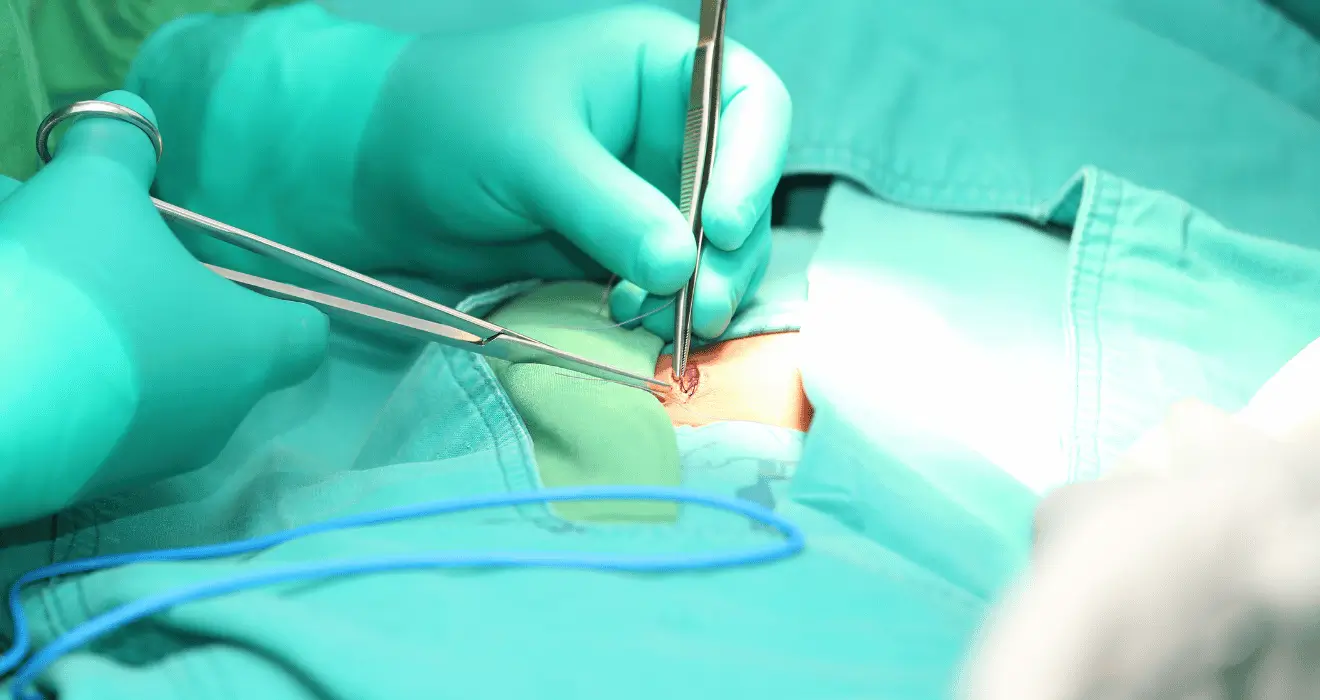
Open surgery is one of the most commonly performed procedures for hernia treatment. The surgeon makes an incision over the affected area, returns the protruding tissue to its normal position, and repairs the weakened abdominal wall. In many adult patients, surgical mesh may be used to strengthen the repair.
3. Laparoscopic Hernia Surgery
Laparoscopic hernia repair is a minimally invasive procedure performed through small incisions using a camera and specialized surgical instruments.
For selected patients, Laparoscopic Surgery at Yashodhara Super Speciality Hospital may offer several potential benefits, including:
- Smaller incisions
- Less postoperative discomfort
- Smaller scars
- Earlier mobility
- Faster return to routine activities in appropriate cases
Learn more about Laparoscopic Surgery:
The most suitable surgical approach should always be decided after a detailed evaluation by a qualified surgeon.
Open vs Laparoscopic Hernia Surgery
Many patients ask which procedure is better.
The answer depends on the individual patient rather than the procedure itself.
Open surgery may be preferred for certain hernia types or complex cases, while laparoscopic surgery may be appropriate for selected patients who are suitable candidates for minimally invasive treatment.
Your surgeon will consider factors such as:
- Type of hernia
- Size of the defect
- Previous abdominal surgeries
- Overall health
- Age
- Emergency versus planned surgery
The goal is to choose the safest and most effective treatment for your specific condition.
What Is Mesh Repair?
During many adult hernia repairs, surgeons use a surgical mesh to reinforce the weakened abdominal wall.
Mesh is not required in every case. The decision depends on several factors, including:
- Hernia type
- Size of the hernia
- Surgical technique
- Patient’s age and health
- Surgeon’s clinical assessment
Your surgeon will explain whether mesh is recommended and discuss its benefits and potential risks before surgery.
Is Hernia Surgery Safe?
Hernia repair is a commonly performed procedure with a high success rate. However, like any surgery, it carries certain risks.
Possible complications include:
- Infection
- Bleeding
- Pain
- Fluid collection
- Hernia recurrence
- Nerve-related discomfort
- Mesh-related complications in selected cases
- Anesthesia-related risks
A thorough pre-operative evaluation helps reduce these risks and ensures the safest possible treatment plan.
Recovery After Hernia Surgery
Recovery varies depending on the type of hernia, surgical technique, and the patient’s overall health.
After surgery, your healthcare team will provide instructions regarding:
- Wound care
- Pain management
- Walking and physical activity
- Diet
- Lifting restrictions
- Follow-up appointments
Many patients are encouraged to start gentle walking soon after surgery, but strenuous activities and heavy lifting should only be resumed after the surgeon’s approval.
Following post-operative instructions carefully can support healing and reduce the risk of recurrence.
Can a Hernia Come Back?
Although hernia repair is generally successful, recurrence is still possible.
Factors that may increase recurrence risk include:
- Obesity
- Smoking
- Poor tissue quality
- Diabetes
- Wound infection
- Heavy lifting before complete recovery
If you notice another bulge after surgery, consult your surgeon promptly for evaluation.
Can Hernias Be Prevented?
Not every hernia can be prevented, but adopting healthy habits may help reduce the risk.
You can lower abdominal pressure by:
- Maintaining a healthy weight
- Treating chronic constipation
- Managing persistent cough
- Using proper lifting techniques
- Avoiding unnecessary heavy strain
- Quitting smoking
- Controlling diabetes and other chronic illnesses
For lifestyle guidance, patients may explore Nutrition & Preventive Health services at Yashodhara Super Speciality Hospital:
Why Choose Yashodhara Super Speciality Hospital for Hernia Treatment in Solapur?
Choosing the right hospital is an important step in receiving safe and effective hernia care.
Yashodhara Super Speciality Hospital offers a comprehensive approach that includes:
- Experienced General Surgeons
- Advanced diagnostic facilities
- Personalized treatment planning
- Open and minimally invasive surgical options
- Modern operation theatres
- Experienced anesthesia team
- Post-operative care and follow-up
- Emergency support when required
Patients can access a range of related specialties under one roof, including:
Patients experiencing sudden severe pain, a non-reducible bulge, persistent vomiting, or abdominal swelling should seek immediate medical attention. You can also learn more by reading:
When to Visit the Emergency Room
Conclusion (Hernia Treatment in Solapur)
A hernia may begin as a small, painless lump, but it should never be ignored. Without appropriate evaluation, some hernias can enlarge, become painful, or lead to serious complications.
If you notice a bulge in your groin, abdomen, belly button, or near a previous surgical scar, consult a qualified hernia doctor in Solapur for an accurate diagnosis.
The right treatment depends on the type of hernia, its size, your symptoms, overall health, and the risk of complications. Some patients may only require monitoring, while others may benefit from planned open or laparoscopic hernia repair.
If you are looking for reliable hernia treatment in Solapur, the General Surgery team at Yashodhara Super Speciality Hospital can evaluate your condition and recommend the most appropriate treatment plan.
Do not delay medical consultation if you experience increasing pain, a rapidly growing lump, or emergency symptoms. Early diagnosis and timely treatment can help prevent complications and support a smoother recovery.
FAQs
1. What are the early signs of a hernia?
Ans: The most common early sign is a bulge or lump in the abdomen or groin that becomes more noticeable when standing, coughing, or lifting heavy objects. Some people also experience mild discomfort or a feeling of pressure.
2. Can a hernia heal without surgery?
Ans: In most adults, a hernia does not heal on its own. Small hernias with minimal symptoms may be monitored, but regular medical evaluation is important.
3. When should I consider hernia surgery?
Ans: Surgery is usually recommended when the hernia causes pain, continues to grow, affects daily activities, or has a higher risk of complications such as incarceration or strangulation.
4. Is laparoscopic hernia surgery better than open surgery?
Ans: Neither approach is universally better. The choice depends on the type of hernia, previous surgeries, overall health, and your surgeon’s assessment.
5. How long does recovery take after hernia surgery?
Ans: Recovery varies from person to person. Many patients can resume light daily activities within a short period, but returning to strenuous exercise or heavy lifting should only be done after the surgeon’s approval.